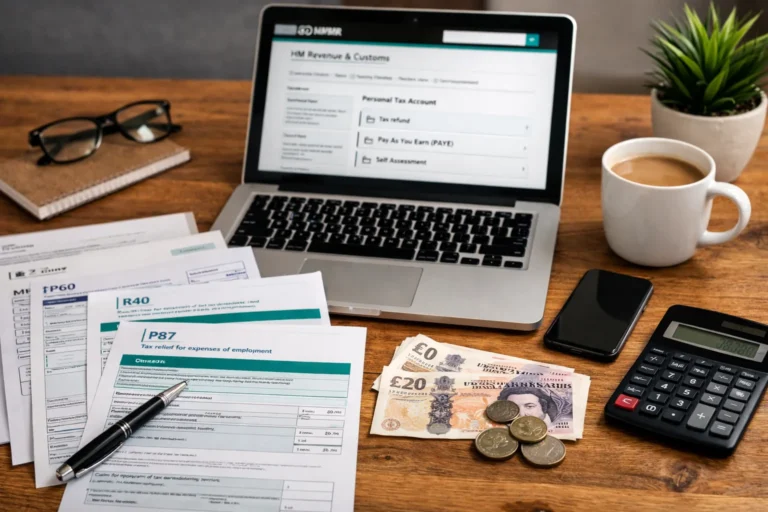
How to Claim a Tax Refund in the UK 2026 (Step-by-Step) – Discover how UK taxpayers reclaim £300–£900 from HMRC every year. Learn eligibility, required forms, and how to receive your refund in as little as 3–5 days.
Many UK taxpayers overpay tax each year without realising it. This can happen due to incorrect tax codes, job changes, emergency PAYE deductions, or simply because HMRC did not have the correct information about your income. Recent reports suggest millions of UK taxpayers overpay income tax every year, often due to tax code errors or changes in employment circumstances.
The good news is that if you’ve paid too much tax, you can usually claim a tax refund from HMRC (HM Revenue & Customs). In many cases, the process is straightforward and can be completed online in just a few minutes.
This guide explains how to claim a tax refund in the UK in 2026 step-by-step, including eligibility, timelines, required forms, and common mistakes to avoid.
Understanding Tax Refunds in the UK
A tax refund (also called a tax rebate or repayment) occurs when you have paid more tax than you legally owe during a tax year.
In the UK, the tax year runs from 6 April to 5 April the following year. After this period, HMRC reviews your records and determines whether you paid the correct amount of tax.
If you overpaid, you may receive a refund through:
- Your HMRC Personal Tax Account
- A P800 tax calculation letter
- A Self Assessment tax return
- A claim submitted through specific HMRC forms
HMRC may automatically notify you if you’re owed money, but you can also check and claim your refund yourself if you believe you overpaid.
Common Reasons People Overpay Tax in the UK
Overpayments happen more often than many people realise. Some of the most common reasons include:
1. Incorrect Tax Code
Your tax code tells employers how much tax to deduct from your salary. If the code is wrong, you may pay too much tax.
2. Changing Jobs
If you start a new job and your previous tax information hasn’t transferred, you might be placed on an emergency tax code.
3. Multiple Jobs
People working two jobs sometimes pay excess tax because allowances are misallocated.
4. Work Expenses
Employees can claim tax relief on certain job-related expenses such as:
- Uniforms
- Tools
- Professional subscriptions
- Working from home
5. Self-Assessment Overpayments
Self-employed individuals may overpay tax through payments on account when their income drops in the following year.
6. Pension or Savings Tax
Tax deducted from pensions or savings interest can sometimes be higher than necessary.
How Much Does It Cost to Live in the UK in 2026? Learn the real cost of rent, groceries, utilities, and transport with detailed UK monthly budgets.
How to Check if You Are Due a Tax Refund
Before claiming a refund, you should first confirm whether you have overpaid tax.
Method 1: Check Your HMRC Personal Tax Account
Log into your Personal Tax Account on the GOV.UK website.
You can see:
- Income reported to HMRC
- Tax paid during the year
- Your current tax code
- Any repayment notifications
Method 2: Look for a P800 Letter
HMRC often sends a P800 tax calculation if they believe you have paid too much or too little tax.
The letter explains:
- The amount you overpaid
- Why it happened
- How to claim your refund
Method 3: Review Your Payslips
Check whether your tax code appears unusual.
Examples of emergency codes include:
- BR
- D0
- D1
- M1
- X
These often indicate temporary deductions and may lead to overpayment.
Step-by-Step Guide: How to Claim a Tax Refund in the UK (2026)
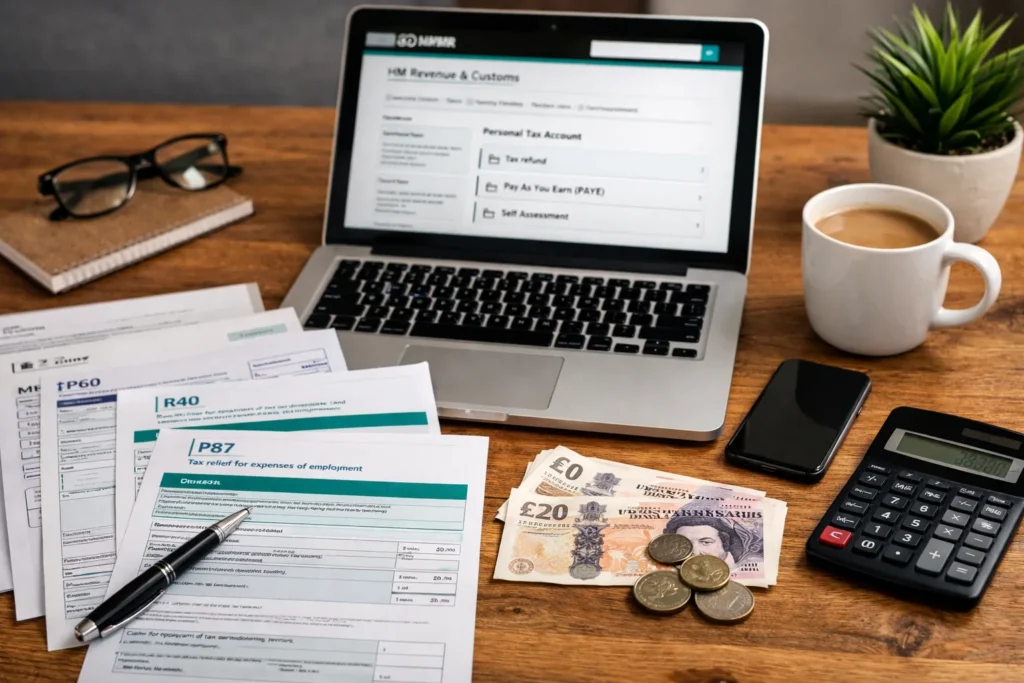
Below is a simple breakdown of how the process works.
Step 1: Gather Your Tax Information
Before making a claim, collect these documents:
- National Insurance number
- P60 (annual earnings summary)
- P45 (if you left a job)
- Payslips
- Bank details
- Government Gateway login
If you are self-employed, you may also need:
- Self Assessment tax return
- Business expense records
Step 2: Sign In to Your HMRC Personal Tax Account
Go to the official GOV.UK website and log in using your Government Gateway ID.
Inside your account you can:
- Check tax calculations
- View refund eligibility
- Submit repayment requests
Step 3: Confirm the Refund Amount
HMRC will display the amount owed if an overpayment has been identified.
Typical refund amounts vary widely, but some reports suggest the average UK refund can be several hundred poundsdepending on the circumstances.
Step 4: Submit Your Claim
If the system confirms you are due a refund, you can request payment by:
- Bank transfer (BACS)
- Cheque
Online claims require:
- Your National Insurance number
- Reference number from the P800 letter (if applicable)
If your P800 allows online claims, you can request the refund directly through HMRC’s service.
Step 5: Wait for Payment
Processing times vary depending on how you applied.
| Claim Method | Typical Timeframe |
| Online bank transfer | 3–5 working days |
| Online after tax return | 5–10 working days |
| Cheque request | Up to 6 weeks |
| Paper tax return | Up to 8 weeks |
Online refunds are typically the fastest option.
In some cases where further checks are required, the process may take longer.
Alternative Ways to Claim a UK Tax Refund
Depending on your situation, you may need to use a specific HMRC form.
P87 Form – Work Expenses
Used to claim tax relief for job expenses such as:
- Uniform cleaning
- Tools
- Travel expenses
R40 Form – Savings or Pension Tax
Used when reclaiming tax on:
- Savings interest
- Pension income
- Redundancy payments
Self Assessment Tax Return
Required for:
- Self-employed individuals
- Company directors
- Landlords
- High-income earners
Refunds are usually issued after the return is processed.
How Far Back Can You Claim a Tax Refund?
In the UK, you can typically reclaim overpaid tax for up to four previous tax years.
For example:
| Tax Year | Claim Deadline |
| 2025–2026 | April 2030 |
| 2024–2025 | April 2029 |
| 2023–2024 | April 2028 |
This means if you overpaid tax in previous years, you may still be able to claim it.
Practical Example of a Tax Refund
Example Scenario
James works in London and changed jobs twice in one year.
During the transition:
- His new employer applied an emergency tax code
- Extra tax was deducted for several months
After the tax year ended:
- HMRC calculated his total income
- Determined he paid £520 too much tax
James logged into his HMRC Personal Tax Account and requested the refund.
The money arrived in his bank account five working days later.
Common Mistakes When Claiming a Tax Refund
Avoid these common errors to ensure your claim is processed quickly.
- Using Tax Refund Companies
- Some private companies charge 20–40% commission for claiming refunds you could claim yourself for free.
- Ignoring Your Tax Code
- If your tax code is wrong, you could continue overpaying tax for years.
- Missing the Four-Year Deadline
- Refund claims older than four years may be rejected.
- Not Updating HMRC After Job Changes
- Failing to update HMRC when changing jobs or income sources often causes overpayments.
- Falling for Tax Refund Scams
- HMRC rarely contacts taxpayers by email about refunds. Always use official GOV.UK services.
FAQs: Claiming a Tax Refund in the UK
How long does a UK tax refund take?
Online refunds are often paid within 3–10 working days, while cheque payments can take several weeks depending on processing times.
Do I need to apply for a refund or does HMRC send it automatically?
Sometimes HMRC automatically sends refunds after reviewing your tax records, but in many cases you must log in and claim the refund yourself.
Can I claim a tax refund if I leave the UK?
Yes. You can still claim a refund after leaving the UK if you overpaid tax during employment or through PAYE.
What forms are used to claim tax refunds?
Common forms include:
• P87 – work expenses
• R40 – savings and pensions
• Self Assessment return – for self-employed taxpayers
What happens if my tax calculation is wrong?
If you believe your P800 calculation is incorrect, you should contact HMRC and provide supporting documents such as payslips or P60 forms.
Can I claim a refund for multiple years?
Yes. HMRC allows claims for the current tax year and the previous four tax years, provided the claim is submitted before the deadline.
Summary
Claiming a tax refund in the UK is simpler than many people think. If you have overpaid income tax, HMRC allows you to reclaim the money through your online tax account or via specific forms depending on your circumstances.
Key Points to Remember
- Millions of UK taxpayers overpay tax each year.
- Refunds occur when HMRC determines you paid too much income tax.
- You can check eligibility through your HMRC Personal Tax Account.
- Online claims are usually processed within 5–10 working days.
- You can claim refunds for up to four previous tax years.
If you suspect you have overpaid tax, it’s worth checking your tax records. Even a small mistake in your tax code could mean hundreds of pounds sitting unclaimed with HMRC.