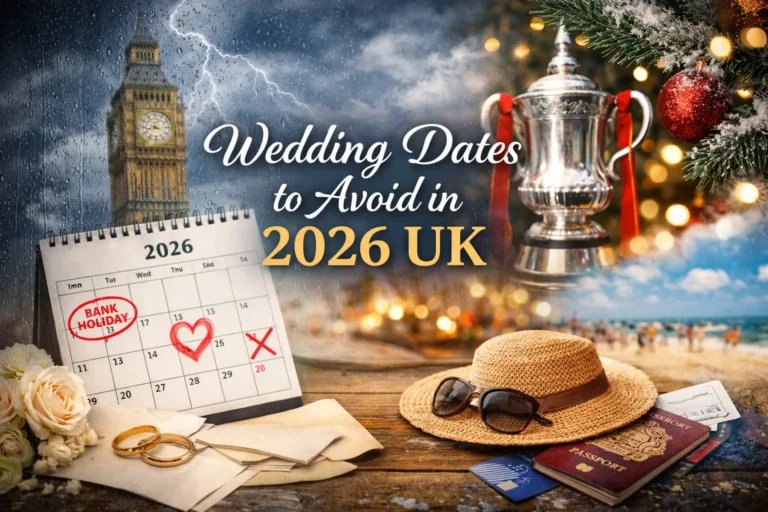
Planning a wedding in the UK is as much about choosing the right date as it is about the venue or guest list. While many couples focus on popular summer Saturdays, experienced planners know that some dates are best avoided due to weather risks, public holidays, school breaks, cultural observances, or major national events that drive up costs and reduce availability.
This in-depth, research-based guide to Wedding dates to avoid in 2026 UK is written for couples who want accurate, practical, and UK-specific information not myths or filler. Every section is grounded in official calendars, historical weather patterns, and reputable UK data sources.
Why Some Wedding Dates Are Best Avoided in the UK
Certain wedding dates in the UK can cause problems such as:
- Higher venue and supplier costs
- Poor guest attendance due to travel congestion
- Unpredictable or extreme weather
- Accommodation shortages
- Cultural or religious conflicts
- Clashes with national sporting or cultural events
Understanding these factors helps couples avoid unnecessary stress and plan a smoother celebration.
Official UK Calendars & Key Dates (2026)
Below is a table of official UK-wide bank holidays in 2026, based on government calendar data.
UK Bank Holidays 2026 (England & Wales)
| Holiday | Date | Day |
| New Year’s Day | 1 January 2026 | Thursday |
| Good Friday | 3 April 2026 | Friday |
| Easter Monday | 6 April 2026 | Monday |
| Early May Bank Holiday | 4 May 2026 | Monday |
| Spring Bank Holiday | 25 May 2026 | Monday |
| Summer Bank Holiday | 31 August 2026 | Monday |
| Christmas Day | 25 December 2026 | Friday |
| Boxing Day (substitute) | 28 December 2026 | Monday |
Note: Scotland and Northern Ireland observe additional holidays (e.g., St Andrew’s Day, Battle of the Boyne). Couples with guests travelling across the UK should consider these variations.
Avoidance Categories Explained
Weather Risk Dates (UK Climate Considerations)
According to long-term UK climate data from the Met Office, the UK experiences:
- Highest rainfall: October–January
- Cold snaps & frost risk: December–February
- Heatwaves (less predictable): July–August
- Strong winds: Late autumn to early spring
⚠️ High-risk weather periods for weddings:
- Outdoor weddings between late October and early March
- January–February (snow, ice, transport disruption)
- Late November–December (storms and flooding risk)
Major Holidays & Travel Peaks
Public holidays and school breaks significantly affect guest travel, accommodation prices, and supplier availability.
Dates commonly avoided by UK couples:
- Christmas week
- Easter weekend
- Late July–August school holidays
- Bank holiday weekends
During these periods:
- Hotel prices rise sharply
- Roads, trains, and airports are congested
- Guests are more likely to be unavailable
Cultural & Religious Observances (UK Context)
Even non-religious couples should be aware of major observances that affect guest availability.
Commonly avoided periods include:
- Easter Weekend (Christian observance)
- Ramadan (Muslim fasting period – dates vary by moon sighting)
- Yom Kippur (Jewish holy day)
- Good Friday (restricted entertainment licenses in some areas)
In 2026, Ramadan is expected to fall approximately mid-February to mid-March (subject to moon sighting).
Sporting & National Events
Major sporting events can reduce guest attendance, affect hotel availability, and dominate media attention.
Key UK events in 2026 include:
- FA Cup Final (traditionally May)
- Six Nations Championship weekends (February–March)
- Wimbledon Championships (late June–early July)
- Major music festivals (e.g., Glastonbury – late June)
Lunar & Astrological Dates (Cultural Consideration)
While not legally significant, some UK couples consider lunar calendars for cultural or personal reasons.
Dates sometimes avoided:
- Mercury retrograde periods (communication & logistics concerns)
- Full moons (beliefs vary by culture)
These considerations are optional but relevant for some couples.
Month-by-Month: Wedding Dates to Avoid in 2026 UK
January 2026
- 1 January (Thu) – New Year’s Day; travel disruption
- 10–25 January – Peak winter weather risk
- All midweek dates – Lower guest availability
February 2026
- 14 February (Sat) – Valentine’s Day; premium pricing
- Mid-February – Ramadan begins (approx.)
- Entire month – Cold, icy conditions common
March 2026
- Early March – Ramadan continues
- Late March weekends – Pre-Easter travel congestion
April 2026
- 3 April (Fri) – Good Friday
- 4–6 April – Easter weekend
- School Easter holidays – Higher accommodation costs
May 2026
- 4 May (Mon) – Early May Bank Holiday
- 25 May (Mon) – Spring Bank Holiday
- FA Cup Final weekend – Travel & hotel congestion
June 2026
- Late June – Major UK festivals
- Exam season – Reduced student availability
July 2026
- Early July – Wimbledon fortnight
- Mid–late July – School summer holidays begin
- High temperatures – Heat management required
August 2026
- All month – Peak school holidays
- 31 August (Mon) – Summer Bank Holiday
- Higher supplier costs
September 2026
- Early September – Back-to-school travel surge
- Midweek dates – Work and school commitments
October 2026
- Late October – Half-term holidays
- Increasing rainfall
November 2026
- 5 November – Bonfire Night
- Late November – Storm season begins
December 2026
- 24–28 December – Christmas & Boxing Day period
- 31 December – New Year’s Eve (premium pricing)
Best Practices for Choosing a Wedding Date in the UK
- Aim for shoulder seasons: Late April, early June, mid-September
- Avoid bank holiday weekends
- Check local school holiday calendars
- Ask venues about weather contingency plans
- Confirm major event schedules early
- Be flexible with Fridays or Sundays for better value
Making the Right Choice for 2026
Choosing a wedding date is a balance between romance and realism. By understanding wedding dates to avoid in 2026 UK, couples can reduce costs, improve guest attendance, and avoid unnecessary complications.
Avoiding high-risk weather periods, major public holidays, and national events allows you to focus on what truly matters celebrating your marriage with peace of mind.