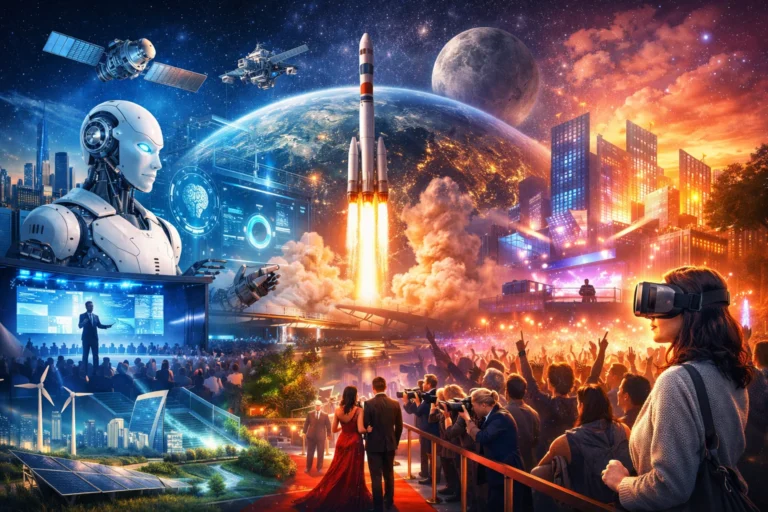
In 2026, the relationship between technology and culture has moved beyond novelty into infrastructure. Artificial intelligence is no longer experimental, digital platforms are reshaping how culture is produced and distributed, and global events both technological and artistic are increasingly designed for hybrid physical-digital audiences. What makes 2026 distinctive is not a single breakthrough or festival, but the convergence of maturing technologies with cultural institutions that now see innovation as essential rather than optional. Global Tech and Cultural Events in 2026
This year sits at an inflection point. Governments are finalizing AI governance frameworks, creative industries are renegotiating authorship and labor in the age of generative tools, and global audiences are more distributed, multilingual, and digitally native than ever before. Against this backdrop, global technology trends in 2026 and international cultural events in 2026 are no longer parallel stories. They are part of the same narrative about how societies adapt, express identity, and collaborate at scale.
What follows is a comprehensive look at the Global Tech and Cultural Events in 2026, and cross-sector movements shaping 2026 distinguishing between confirmed milestones and well-grounded projections, and focusing on why they matter beyond headlines.
Major Global Technology Events in 2026
Global Tech and Cultural Events in 2026
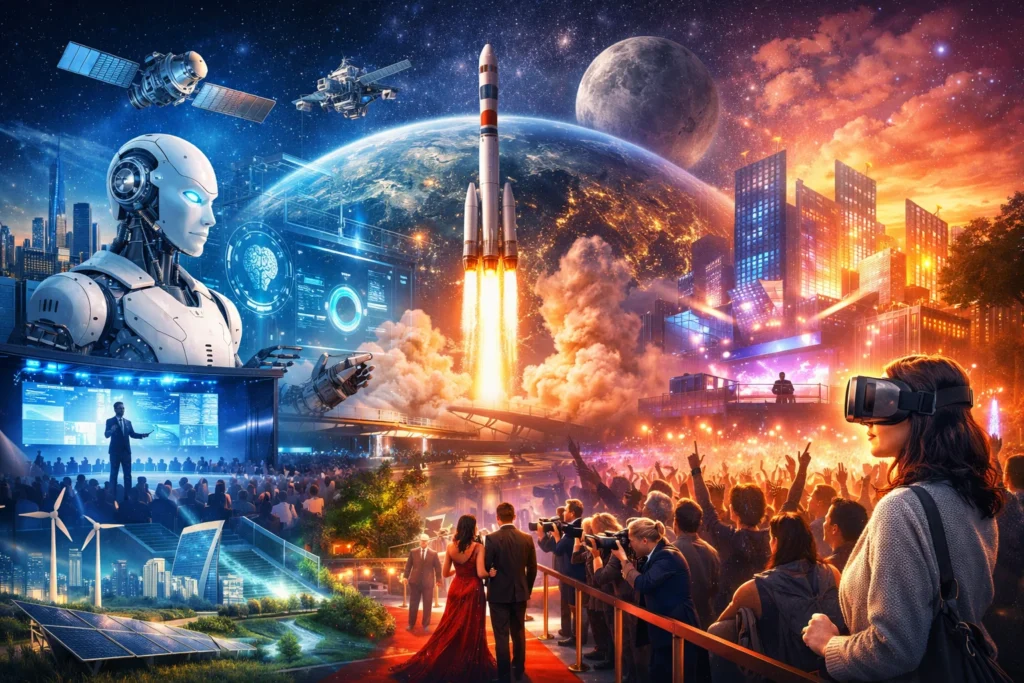
Artificial Intelligence: From Capability to Accountability
By 2026, artificial intelligence has entered what many policymakers describe as its “regulatory era.” Large-scale tech conferences increasingly focus less on raw performance metrics and more on deployment, oversight, and economic integration.
At established gatherings like CES, AI remains embedded across consumer electronics, health technology, and mobility. The difference is tone: demonstrations now emphasize reliability, transparency, and real-world constraints. Healthcare diagnostics, logistics optimization, and enterprise automation dominate discussions, reflecting where AI has proven most commercially and socially viable.
Meanwhile, international policy-facing events often adjacent to economic forums spotlight AI governance, workforce displacement, and cross-border standards. While some of these conversations are contentious, they reflect a shift from speculative debate to operational decision-making.
Web3 and Digital Infrastructure: A More Measured Phase
Web3 in 2026 looks quieter than its early-2020s peak, but also more grounded. Blockchain conferences emphasize infrastructure, compliance, and interoperability rather than disruptive rhetoric. Use cases in supply chain verification, digital identity, and cross-border payments continue to attract institutional interest.
Major gatherings such as WebSummit increasingly integrate Web3 into broader discussions about digital infrastructure rather than treating it as a standalone revolution. This reflects market reality: decentralized technologies are finding niches within existing systems rather than replacing them wholesale.
Climate Tech: Scaling Solutions, Not Prototypes
Climate technology emerges as one of the most consequential sectors of 2026. Conferences dedicated to energy transition, carbon capture, and sustainable materials attract a mix of startups, utilities, and public-sector stakeholders.
Unlike earlier years focused on experimentation, 2026 is about scaling. Panels and showcases center on grid resilience, climate-adaptive agriculture, and industrial decarbonization areas where pilot projects are becoming operational assets. The presence of sovereign funds and development banks signals that climate tech is now a core component of long-term economic planning.
Space and Aerospace: Commercial Maturity
The space sector continues its steady commercialization. Industry events highlight satellite constellations, space-based Earth observation, and early-stage lunar infrastructure planning. While crewed exploration remains symbolically powerful, the most impactful discussions focus on data services, climate monitoring, and communications resilience.
What distinguishes 2026 is normalization. Space technology is no longer framed as speculative ambition but as critical infrastructure supporting navigation, disaster response, and global connectivity.
Consumer Technology: Incremental, Integrated Innovation
Consumer tech events in 2026 lack the dramatic “one more thing” moments of previous decades, but they reveal deeper integration. Wearables, smart home systems, and personal AI assistants are designed to function seamlessly across ecosystems.
The emphasis is on longevity, interoperability, and privacy reflecting consumer fatigue with rapid obsolescence and fragmented platforms. This quieter evolution may ultimately prove more transformative than flashy launches.
Key International Cultural Events and Movements
Film and Media: Redefining Authorship
Film festivals in 2026 continue to grapple with the implications of AI-assisted production. Events like Cannes Film Festival place renewed emphasis on transparency around creative tools, with clearer distinctions between human-led and machine-assisted work.
This does not signal resistance to technology, but recalibration. Curators and juries increasingly reward projects that use digital tools in service of narrative and cultural insight rather than spectacle alone. Parallel industry forums address labor protections, residuals, and intellectual property in an era of algorithmic creativity.
Music and Live Performance: Hybrid Audiences as Standard
Major music festivals in 2026 are designed for both physical attendees and global digital audiences. High-quality live streams, interactive viewing modes, and virtual backstage access are no longer premium add-ons but standard features.
This shift expands access while challenging traditional revenue models. Artists and organizers experiment with tiered digital tickets, limited virtual merchandise, and fan-driven remix platforms blurring the line between audience and participant.
Art and Biennales: Digital Craft Takes Center Stage
Global art biennales increasingly foreground digital craft works that combine code, material design, and cultural research. Rather than celebrating technology for its own sake, curators frame digital art within historical and social contexts: migration, climate anxiety, language loss, and post-colonial identity.
NFTs, once dominant, occupy a more subdued role, often integrated into broader discussions about provenance and preservation rather than speculation.
Global Festivals and Heritage Events
Traditional cultural festivals across Asia, Africa, and Latin America continue to thrive, but with expanded digital documentation and global outreach. High-resolution archives, multilingual storytelling platforms, and diaspora-focused programming help local traditions reach international audiences without flattening their meaning.
This balance between preservation and amplification becomes a defining cultural challenge of the decade.
The Intersection of Technology and Culture
By 2026, the question is no longer whether technology influences culture, but how consciously that influence is managed. Creators, technologists, and institutions increasingly collaborate from the outset rather than retrofitting ethics or accessibility after launch.
AI tools reshape creative workflows, accelerating iteration while raising concerns about homogenization. In response, many artists emphasize process transparency and local specificity using global tools to tell culturally grounded stories.
Digital identity also emerges as a cultural issue. Avatars, virtual spaces, and online personas become extensions of self-expression, prompting new conversations about authenticity, representation, and belonging.
Crucially, collaboration becomes more geographically diverse. Cloud-based production and translation tools enable cross-border creative teams, challenging traditional cultural centers and redistributing influence.
Major Global Events to Watch in 2026, spanning sports, politics, economics, technology, and culture… Continue reading>>
Regional Highlights
North America
The United States and Canada remain hubs for AI research, entertainment technology, and venture capital. However, 2026 sees increased scrutiny of tech monopolies and stronger public-sector involvement in innovation policy. Cultural institutions partner more closely with universities and civic organizations, emphasizing public value over pure growth.
Europe
Europe’s defining contribution in 2026 lies in regulation-informed innovation. Strong data protection frameworks influence global standards, while cities host cultural events that integrate sustainability and heritage preservation. Europe positions itself as a mediator between rapid technological change and social stability.
Asia-Pacific
Asia-Pacific continues to set the pace in consumer technology, gaming, and mobile-first cultural platforms. South Korea and Japan push forward in robotics and immersive media, while Southeast Asia emerges as a center for digital creativity rooted in local narratives.
Africa
Africa’s technology story in 2026 is one of leapfrogging. Fintech, agri-tech, and creative platforms grow rapidly, often tailored to local needs rather than imported models. Cultural festivals increasingly highlight contemporary African digital art, music, and film, challenging outdated global perceptions.
Middle East
Gulf states invest heavily in future-facing technology events, AI research hubs, and cultural megaprojects. Alongside spectacle, there is growing attention to education, local talent development, and regional storytelling.
Latin America
Latin America’s tech and culture scene emphasizes resilience and community. Startups focus on accessibility and public services, while cultural events blend political history with digital experimentation. Regional collaboration strengthens as creators seek alternatives to North American and European gatekeepers.
Societal Impact and Global Trends
Global Tech and Cultural Events in 2026
Economy and Work Culture
The global economy in 2026 reflects uneven but persistent digital transformation. Automation reshapes certain professions, while new roles emerge in oversight, ethics, and interdisciplinary coordination. Conferences increasingly address reskilling as a continuous process rather than a one-time intervention.
Education and Knowledge Access
Education technology becomes more adaptive and localized. Universities and cultural institutions collaborate on open-access resources, micro-credentials, and hybrid learning models that serve both traditional students and lifelong learners.
Ethics and Governance
Ethical frameworks move from theory to enforcement. AI audits, cultural impact assessments, and sustainability reporting become standard components of major projects. While implementation varies by region, the expectation of accountability is now global.
Sustainability
Sustainability is no longer a separate track but an underlying criterion. Events are evaluated not just by attendance or revenue, but by environmental footprint and community impact. This shift influences everything from venue selection to digital infrastructure choices.
What These Events Mean for the Future
The events and movements of 2026 suggest a future defined less by disruption and more by integration. Technology is increasingly judged by how well it aligns with human values, cultural diversity, and long-term resilience.
Global innovation no longer flows in a single direction. Ideas circulate through networks shaped by culture, policy, and local context. This decentralization may slow certain processes, but it also produces more durable outcomes.
For creators, technologists, and institutions alike, 2026 reinforces a central lesson: progress is not measured solely by speed or scale, but by relevance and responsibility.
Long-Term Implications Beyond 2026
Global Tech and Cultural Events in 2026
Looking beyond 2026, the significance of this year lies in its recalibration of priorities. Global technology trends in 2026 and international cultural events in 2026 demonstrate a collective shift toward maturity where innovation is expected to coexist with accountability, and cultural expression is amplified rather than overshadowed by digital tools.
The frameworks established now ethical standards, collaborative models, and hybrid formats will shape how societies navigate the rest of the decade. If 2026 proves anything, it is that the future of global innovation is not just technical, but cultural at its core.